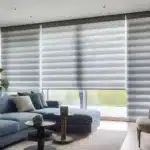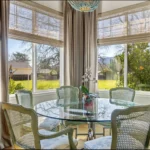
Line, texture, scale, and light—these are the core elements of interior design. When designing a room that feels both curated and comfortable, few window treatments carry the quiet sophistication of a layered window stack. However, combining custom Roman shades with tailored drapery panels bridges the gap between functional light control and architectural depth.
In homes across the DMV—from classic brownstones in Georgetown to modern builds in Bethesda and McLean. However, layering window treatments is more than a design trend. It is an essential approach to climate control, acoustic softening, and tailored luxury.
1. Why Layer? The Dual Benefits of Form and Function
While a single window treatment can solve basic privacy or light needs, pairing Roman shades with custom drapery unlocks both visual richness and elevated functional performance.
| Design Element | Roman Shades (The Base Layer) | Drapery Panels (The Frame Layer) |
| Primary Function | Direct light control, daytime privacy, tailored fit within the window trim. | Frame the window height, seal peripheral drafts, absorb acoustic echo. |
| Visual Impact | Structured horizontal fold patterns (Flat, Hobbled, or Relaxed pleats). | Soft, fluid vertical lines that elongate ceiling height. |
| Fabric Play | Ideal for natural woven woods, crisp linens, or subtle patterned weaves. | Perfect for rich velvets, dense wools, heavy silk blends, or tailored solids. |
2. Selecting the Base Layer: Choosing Your Roman Shade Style
The Roman shade serves as your primary utility layer, sitting directly inside or just outside the window frame.
-
Flat Fold Roman Shades: Offers a clean, contemporary profile. Best suited for bold patterns or geometric weaves, as the fabric remains smooth when drawn down.
-
Hobbled (Soft Fold) Roman Shades: Features cascading loops of fabric down the shade. Adds subtle traditional charm and soft depth when paired with simpler drapery panels.
-
Woven Wood & Grassweave Shades: Brings an organic, earthy texture indoors. However, pairing woven woods with tailored drapes creates a striking balance between natural warmth and structured elegance.
3. Framing the View: Custom Drapery Panels and Pleat Tailoring
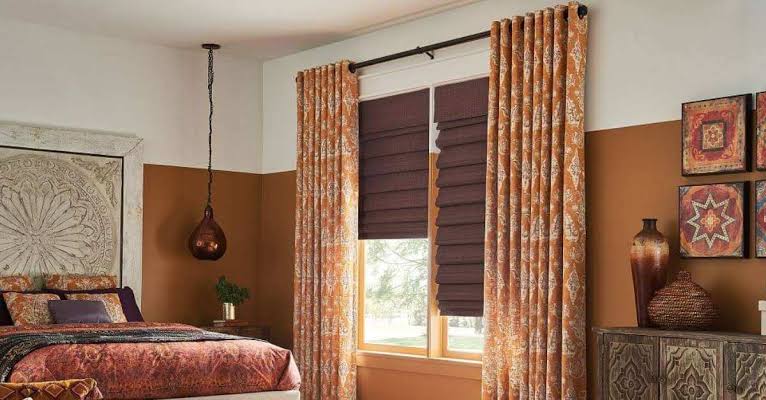
Drapery panels act as the framing architecture, drawing the eye upward and softening the hard edges of window trim.
-
Mount High and Wide: Install your drapery hardware 4 to 6 inches above the window trim—or just below the ceiling crown moulding—to visually elevate room height. Extend the rod wider than the window casing so drawn panels stack neatly on the wall without blocking natural light.
-
Tailored Pleat Styles:
-
Pinch Pleat / Euro Pleat: Classic, tailored headings that drop into precise, uniform folds. Ideal for formal living and dining spaces.
-
Ripple Fold: Smooth, continuous S-curve folds mounted on custom tracks. Perfect for modern, clean-lined interiors.
-
4. Balancing Textures, Color Palettes, and Scale
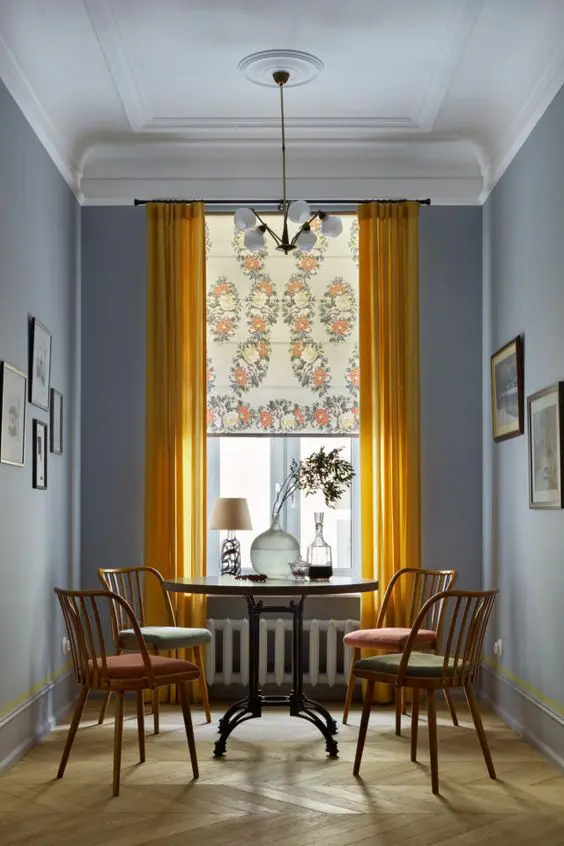
The secret to a successful layered combination lies in contrast and balance. However, avoid pairing two competing bold patterns; instead, focus on tactile harmony.
-
Pattern + Solid Balance: Pair a patterned Roman shade (such as a subtle botanical or geometric motif) with a solid drapery panel that pulls one of the accent colors from the pattern.
-
Tactile Contrast: Combine an organic woven grassweave shade with heavy linen or velvet drapery panels. The contrast between rough natural fibers and soft tailored textiles adds instant depth.
-
Color Temperature Alignment: Ensure the undertones of both fabrics harmonize with your room’s wall paint, trim finish, and surrounding furniture.
5. Thermal Insulation and Light Opacity Control
Layering allows you to customize light and temperature control for every season across the Mid-Atlantic climate.
Daytime Configuration:
Roman Shade (Light Filtering) DOWN + Drapery Panels OPEN
$\rightarrow$ Soft, diffused natural daylight with full privacy.
Nighttime Configuration:
Roman Shade DOWN + Thermal Drapery Panels CLOSED
$\rightarrow$ Complete blackout, noise reduction, and thermal draft protection.
By opting for blackout or thermal interlinings on your drapery panels while keeping your Roman shade light-filtering. However, you create a dynamic window system capable of adapting from bright morning sunlight to cozy, insulated evenings.
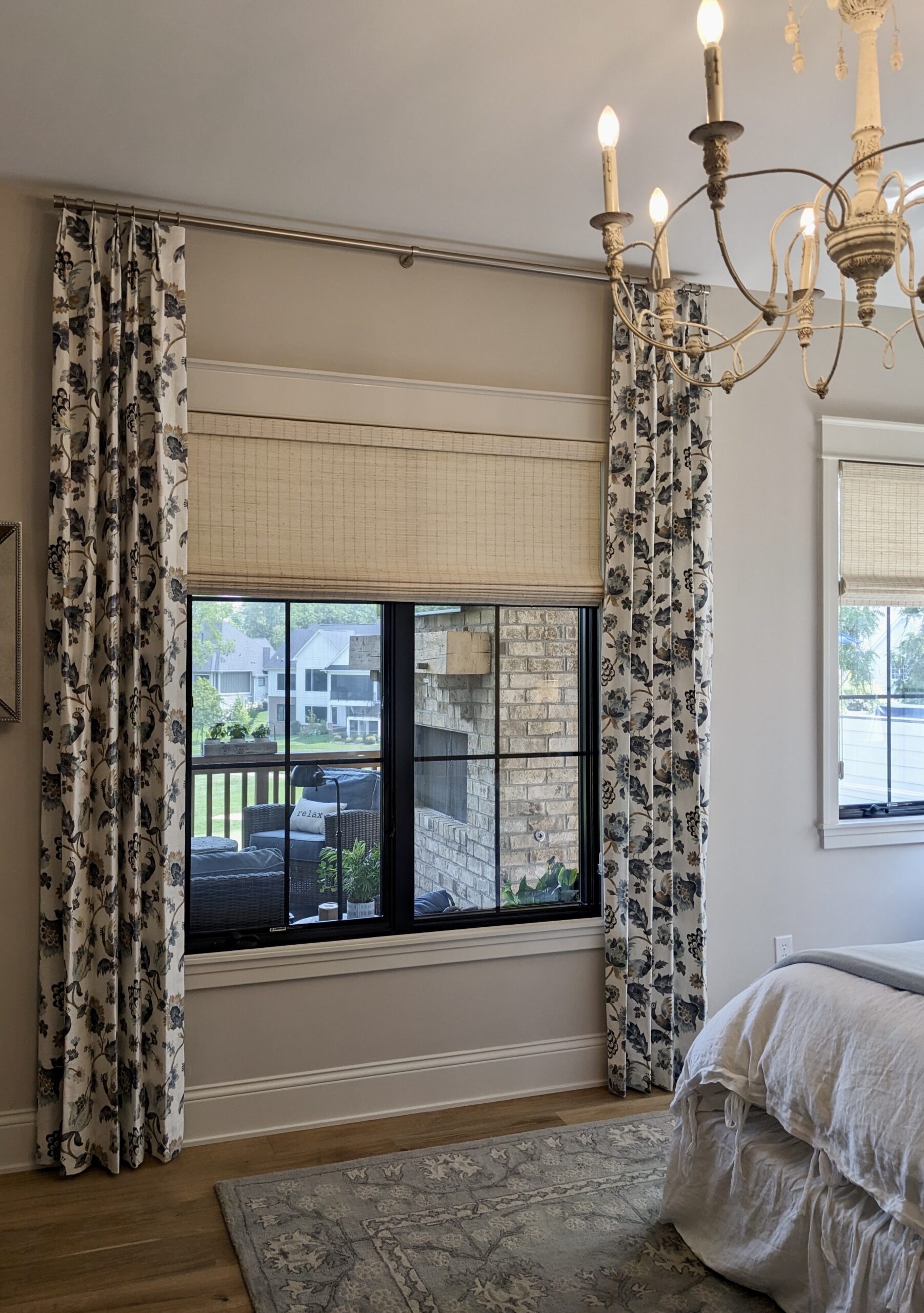
Elevate Your Space with Couvrant Custom Window Treatments
Mastering the balance of fabric weights, pleat styles, and precise measurements requires an experienced design eye. However, at Couvrant Custom Window Treatments, we provide white-glove, artisan execution—from initial technical measurements to custom workroom fabrication and flawless installation.
Ready to transform your windows? Contact our design team today to schedule an in-home consultation across Washington D.C., Maryland, and Northern Virginia.