There is a reason why top interior designers rarely install just a single window treatment in a luxury room. Combining the clean, functional lines of a blind or shade with the soft, elegant layering of custom drapery panels creates an instant sense of depth and visual volume. It is the ultimate trick to making a space feel fully realized and tailored.
But pairing these two distinct elements takes a careful eye. Done correctly, it creates an elegant, high-end sanctuary. Done incorrectly, your windows can quickly end up looking cluttered, mismatched, or structurally awkward.
If you want to mix drapes and blinds like a seasoned professional, you need to navigate around a few common design pitfalls. Here are the three most frequent mistakes we see homeowners make—and exactly how the design team at Couvrant fixes them.
Mistake 1: Clashing Textures and Materials
The most frequent mistake happens during material selection. If you try to pair two completely different hard textures or mix opposing patterns on the same window, the treatments will fight each other for visual dominance.
-
The Culprit: Installing heavy, dark-grained faux wood blinds and then layering a highly intricate, busy floral print drapery panel right over them. The result is visual chaos.
-
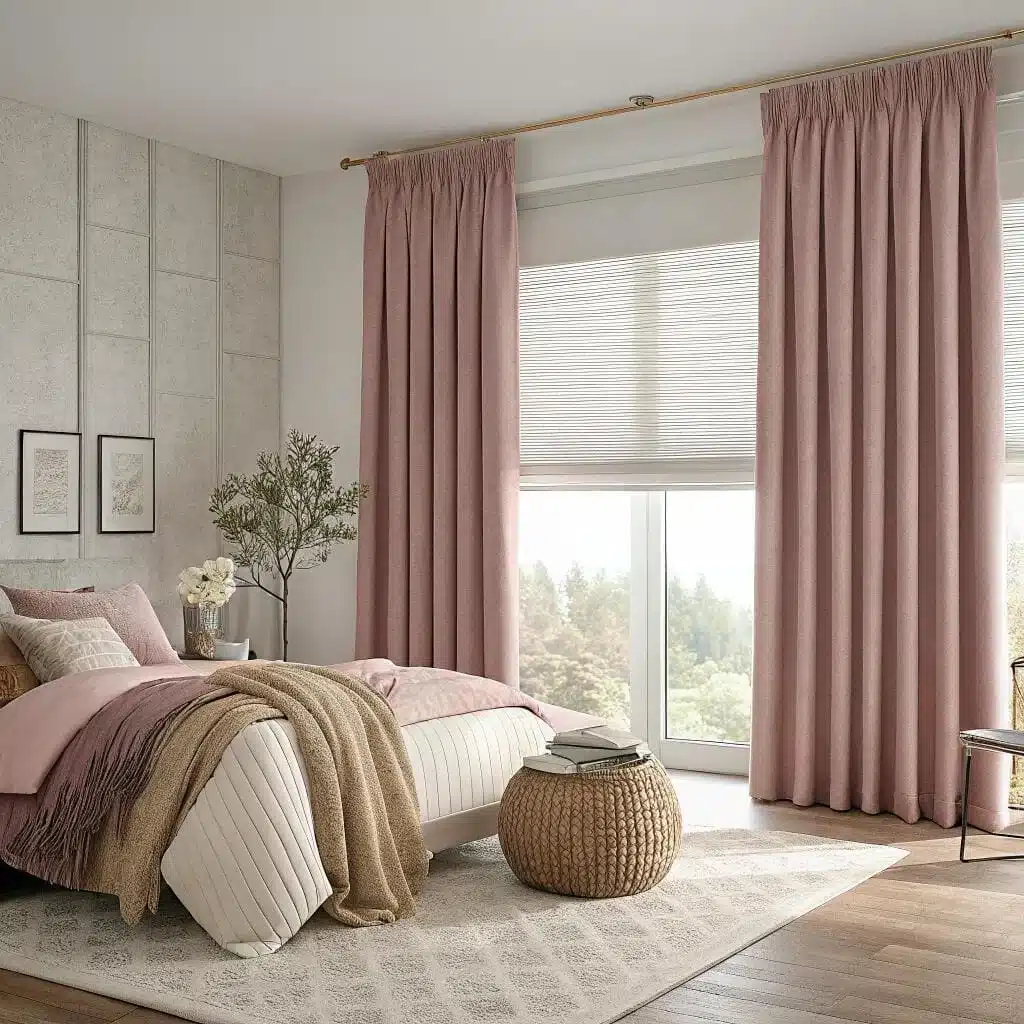
The Pro Fix: Follow the rule of opposites. If your base layer is highly textured—like a natural bamboo or woven wood shade—keep your outer drapery panels smooth, solid, and neutral (like a classic linen or soft cotton blend). Conversely, if you want a bold, patterned drapery fabric to act as the primary artwork in the room, pair it with a very clean, minimalist, low-profile solar roller shade beneath it.
Mistake 2: Mounting Hardware at the Wrong Height
Nothing ruins the visual proportion of a room faster than hanging your drapery rod directly on top of the window frame. This mistake chops your walls in half visually and shrinks the perceived height of your ceilings.
-
The Culprit: Mounting an inside-set blind, and then placing the exterior drapery rod just an inch above the window casing. It creates an awkward, crowded cluster of hardware right at the window line.
-
The Pro Fix: Draw the eye upward. Even if your blinds are nestled neatly inside the window casing, mount your custom drapery rod high and wide. We recommend placing the rod roughly 4 to 6 inches below your ceiling line (or halfway between the top of the window trim and the ceiling). Extend the rod 12 to 18 inches past the sides of the window frame. This creates the illusion of a much grander window and allows the drapes to frame the blinds beautifully without blocking any natural daylight when pulled open.
Mistake 3: Overlooking the Lighting and Privacy Dynamics
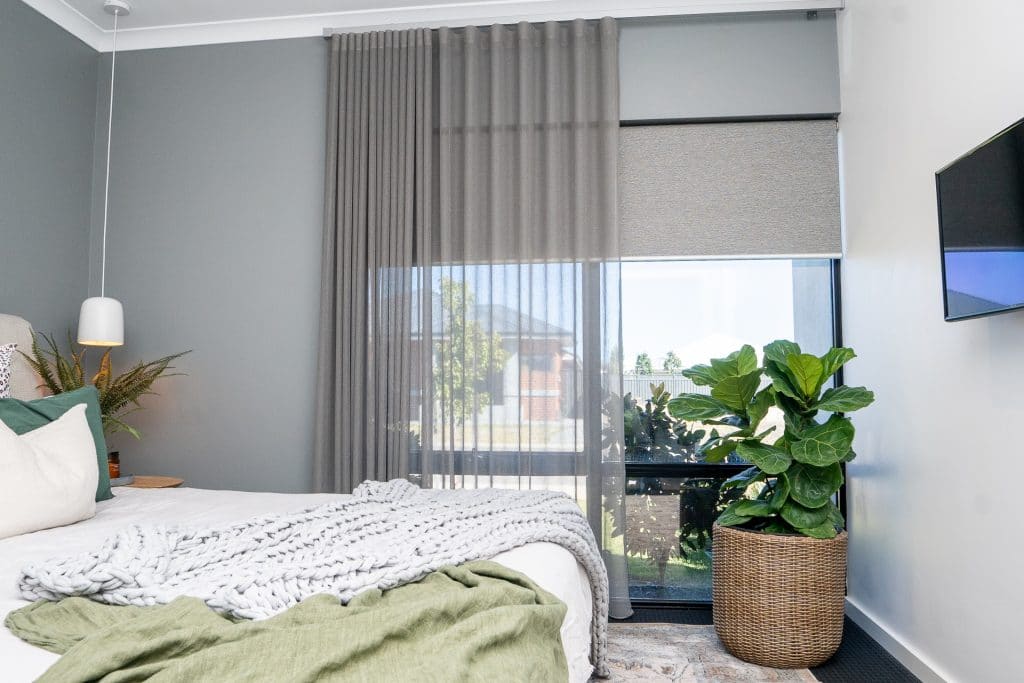
When you combine two different window treatments, they shouldn’t just look good together—they need to function as a unified team to manage your room’s light throughout the day.
| The Layering Combination | How They Work Together | Best Room Placement |
| Solar Roller Shade + Light-Filtering Sheers | Filters out harsh afternoon glare and UV rays while filling the room with a soft, ambient glow. | Living Rooms, Home Offices, sun-drenched Sunrooms |
| Natural Woven Woods + Blackout Lined Drapes | The woven woods offer privacy and soft texture during the day; the blackout drapery panels seal out nighttime light. | Main Bedrooms, Guest Rooms, Media Rooms |
| Wood Plantation Shutters + Silk Drapery Panels | The shutters provide complete structural directional control over natural light; the silk panels soften the hard architectural edges. | Formal Dining Rooms, Historic Front Parlors |
Mastering the Layered Aesthetic with Couvrant
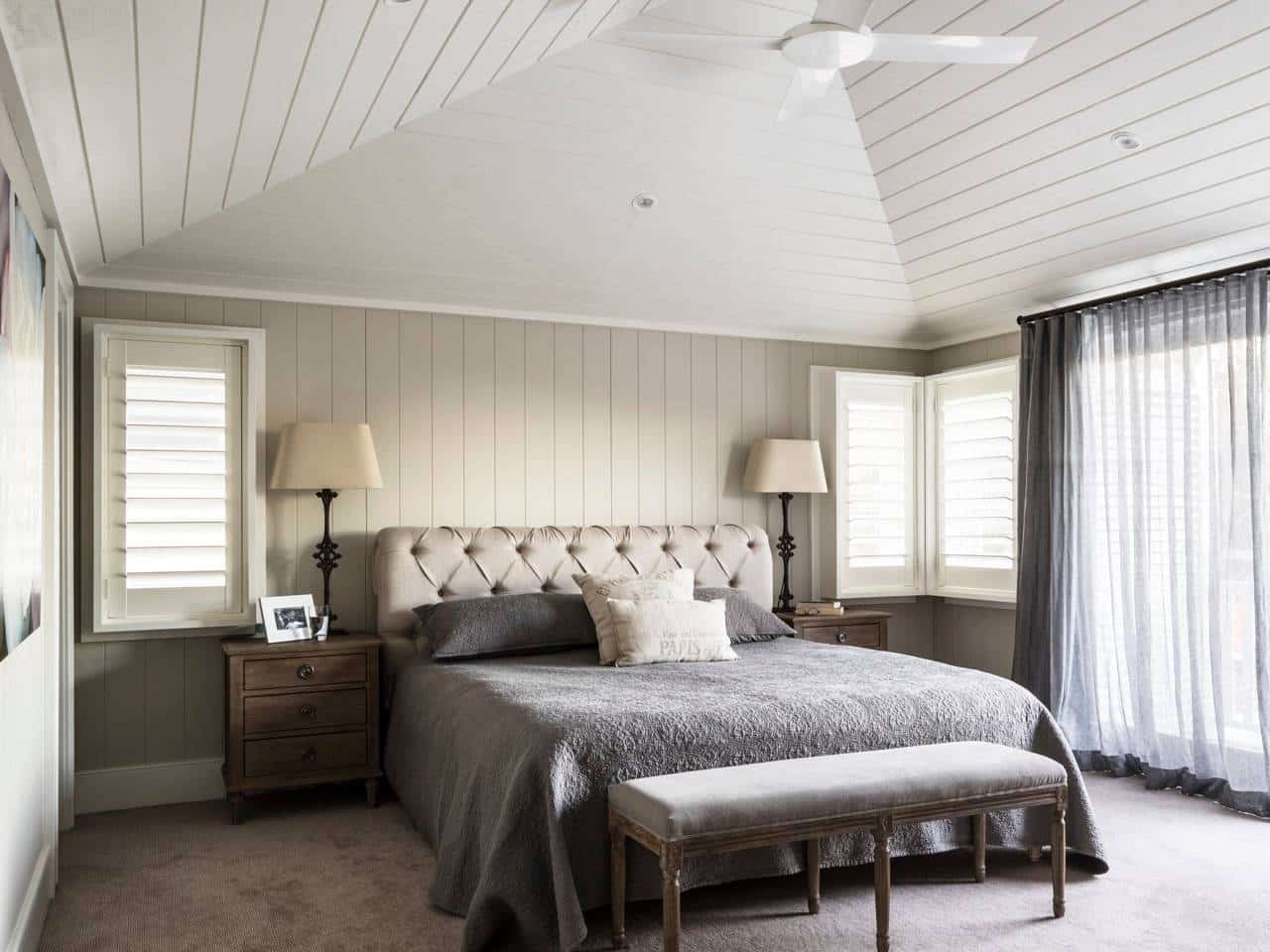
Mixing blinds and drapes is an incredible way to inject personality, luxury, and warmth into your property. But because windows vary wildly in scale, depth, and trim profile, achieving a perfectly proportional, custom look requires precise calculations.
At Couvrant, we eliminate the stress of coordinating your window finishes. Our expert design consultants bring a mobile showroom directly to your residence, allowing you to touch fabric samples, look at wood finishes, and see exactly how different combinations interact with your home’s unique lighting and architecture.
If you are ready to elevate your windows with perfectly executed, layered luxury, reach out to our team today to book your in-home consultation.