There is nothing quite like looking out of a floor-to-ceiling window onto a sprawling view of the Potomac River, the bustling streets of the Navy Yard, or the historic skyline of Capitol Hill. Large-scale glass is a striking architectural feature that floods your home with gorgeous natural light.
But living with giant glass walls eventually brings you face-to-face with a few distinct realities: unforgiving solar glare on your screens, fading hardwood floors from UV rays, soaring AC bills during humid DC summers, and the feeling that you are living in a fishbowl once the sun goes down.
How do you dress a massive wall of glass without ruining the clean, architectural lines that made you fall in love with the space in the first place?
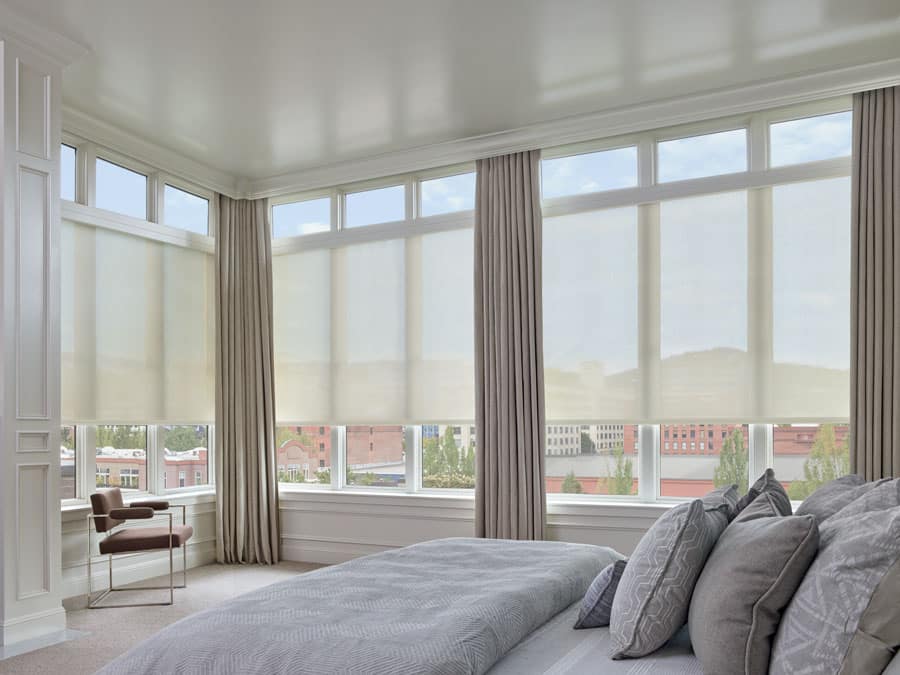
1. Minimalist Motorized Roller Shades
If your goal is to keep the focus entirely on your view and the architecture of your room, motorized roller shades are the gold standard.
Why They Work
When raised, custom roller shades roll up tightly and can be completely hidden inside a recessed ceiling pocket or a sleek matching valance. When lowered, they form a flat, crisp fabric shield that mimics a clean wall.
Fabric Highlight
-
Solar Fabrics: These allow you to maintain your daytime view while significantly cutting down on heat and glare. Think of them like premium sunglasses for your home.
-
Blackout Fabrics: Essential for bedrooms, true blackout roller shades prevent late-night city light pollution from disrupting your sleep.
2. Sliding Panel Tracks (The Modern Vertical)
If you still associate vertical window treatments with noisy, plastic apartment blinds from the 1990s, it’s time for an upgrade. Modern sliding panel tracks—often called gliding window panels—are designed specifically for expansive glass and sliding doors.
Why They Work
Instead of thin, dangling slats, sliding panel tracks feature wide, flat fabric panels (typically 12 to 24 inches wide) that slide smoothly along a low-profile track.
When opened, they stack neatly on top of one another to maximize your clear glass area. When closed, they look like a stunning, architectural fabric screen. They are highly customizable and look incredible in woven natural grasses, textured linens, or solar screen materials.
3. Automated Sheer Shadings & Banded “Zebra” Shades
For spaces where you want continuous light control throughout the day without constantly raising and lowering your shades, dual-action shadings are a game-changer.
Why They Work
-
Sheer Shadings: These feature horizontal fabric vanes suspended between two layers of sheer fabric. You can tilt the internal fabric vanes open to diffuse harsh sunlight into a soft, ambient glow, or tilt them closed for complete privacy.
-
Zebra (Banded) Shades: These use alternating bands of sheer and solid fabric. As you adjust the shade, the bands slide past each other, allowing you to transition from an open, light-filtering view to a closed, highly private look with just a tiny adjustment.
These options provide the soft, floating elegance of drapery with the precise light control of a traditional blind.
4. Why Smart Motorization is a Must for Large Glass
With floor-to-ceiling windows, motorized control transitions quickly from a luxury upgrade to a daily necessity.
Manual pull cords on high, wide windows are heavy to lift, visually messy, and create safety hazards for pets and children. Motorization keeps your windows entirely cord-free.
Smart Tip: By integrating your smart shades with a smart home hub (like Apple Home, Alexa, or Google Home), you can schedule your shades to drop during peak sun hours. This automatically keeps your home cool and prevents your HVAC system from working overtime during those scorching, humid DC summer days.
Designing for Your Space: Key Takeaways
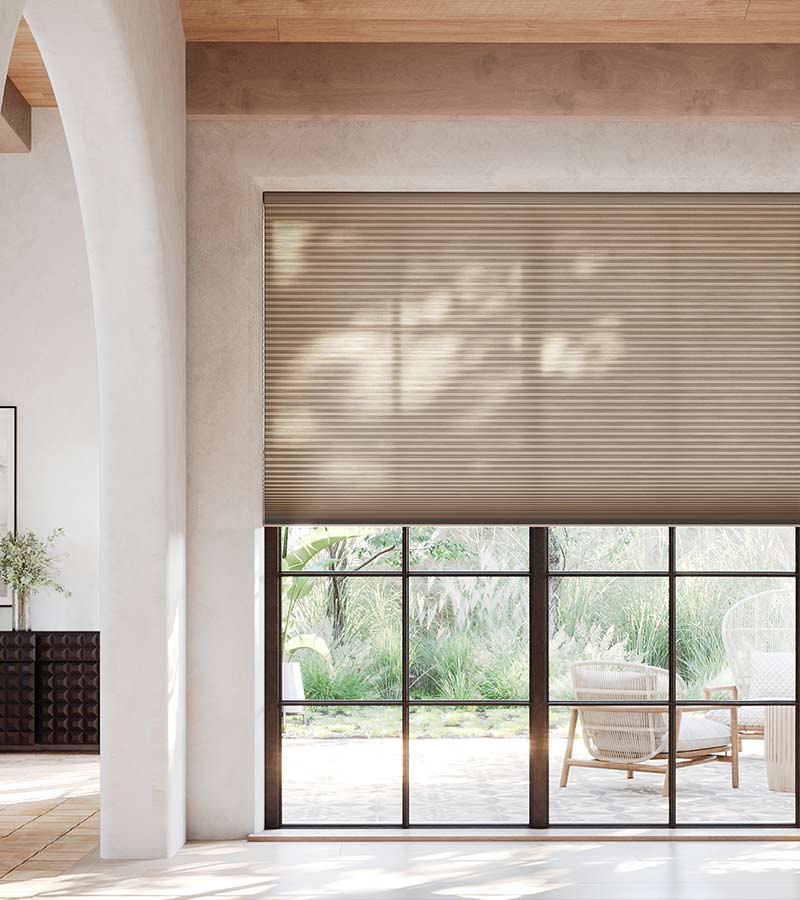
To ensure your tall window treatments look intentional rather than retrofitted, keep these three golden design rules in mind:
-
Ceiling Mount: Always mount your tracks or rollers directly to the ceiling or inside a recessed pocket. This emphasizes the height of the room and eliminates awkward light gaps at the top.
-
Keep Textures Subtle: For large expanses, choose neutral tones or subtle, organic textures that complement your wall color. Heavy, loud patterns on a giant wall of fabric can easily overwhelm a room.
-
Prioritize Custom Measurements: Floor-to-ceiling windows have almost zero margin for error. Off-the-shelf options will sag, leave massive light leaks, or function poorly under the sheer weight of the fabric.